Pakistan’s Youth Submit National Climate Mandate to Parliamentarians at PPAF Conference
(February 3, 2026)
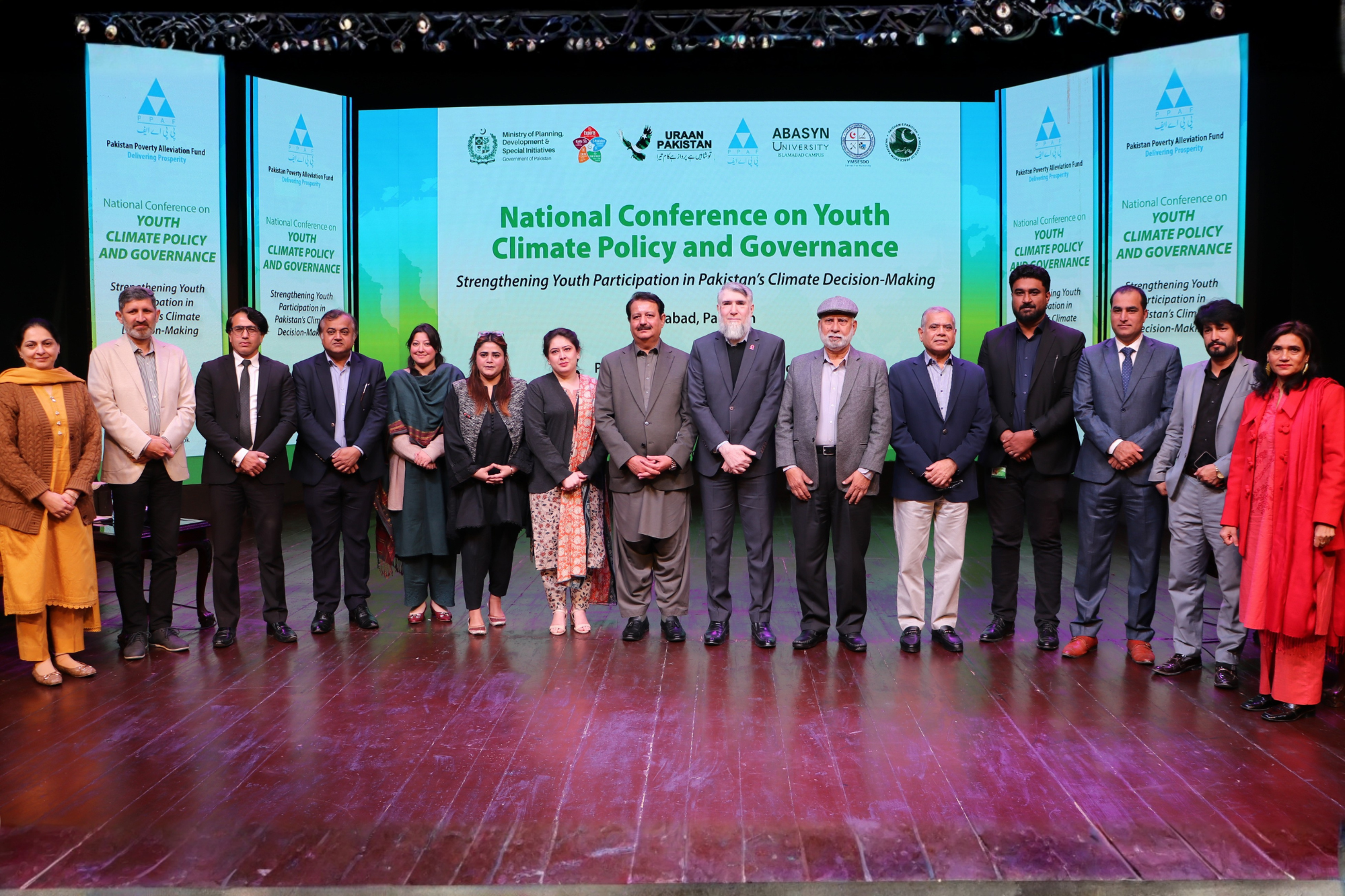
ISLAMABAD, February 3, 2026: In a significant step toward inclusive and youth-responsive climate governance, the Pakistan Poverty Alleviation Fund (PPAF), in collaboration with the Yar Muhammad Samejo Educational Society and Development Organization (YMSESDO), organised the National Conference on Youth Climate Policy and Governance at the Pakistan National Council of the Arts (PNCA).
For the first time in Pakistan, PPAF’s Youth COP simulations empowered youth including girls and persons with disabilities to step into the roles of negotiators, addressing real-world climate diplomacy and local vulnerabilities from drought to glacial risks. Conducted across all four provincial capitals and Gilgit-Baltistan, the simulations provided hands-on platforms for young people to engage directly in policy dialogue, consensus-building, and climate negotiations.
The highlight of the event was the formal presentation of the Consolidated Youth Statement on Climate Action, a youth-driven national climate mandate handed over to Dr. Shaista Jadoon, MNA and Member of the Standing Committee on Climate Change, and Akhtar Bibi, MNA and Member of the Standing Committee on Planning and Economic Affairs.
Opening the conference, Mr. Nadir Gul Barech, Chief Executive Officer, PPAF, emphasised the intersection of climate action, peace, and youth leadership. He said, “Today’s conference marks a decisive shift from viewing youth as future stakeholders to recognising them as indispensable leaders in climate governance. PPAF affirms climate resilience as a poverty priority and considers youth leadership in decision-making and accountability essential to shaping national climate policies, bridging grassroots innovation with state action to place young leaders at the core of a stable, climate-resilient Pakistan.”
Receiving the Youth Statement on Climate Action, Dr. Shaista Jadoon remarked, “The leadership, innovation, and sense of responsibility demonstrated by our youth are already shaping Pakistan’s climate future. The government recognises youth as essential partners in strengthening climate resilience and remains committed to ensuring their priorities are reflected in policy frameworks. PPAF’s initiative has played a crucial role in bridging youth-led action and national decision-making.”
MNA Akhtar Bibi also appreciated PPAF and YMSESDO for supporting initiatives that link climate resilience with protecting the most vulnerable communities.
The conference featured a high-level panel discussion on translating youth-led climate diplomacy into national and provincial policy action. Panelists included Brig (R) Prof. Dr. M. Salik Javaid (Abasyn University), Mr. Arshad Rashid (Chief Programmes, PPAF), Dr. Aamir Kaleem (Director Programmes, CARE International), and Ms. Qurat-ul-Ain Cheema (Environmental Governance Expert). The discussion highlighted that youth-led initiatives are strategic assets for the state and called for meaningful youth representation in leadership roles.
Concluding the conference, Mr. Barech thanked parliamentarians, panelists, youth participants, and representatives from academia, civil society, UN agencies, the diplomatic community, and the media. He noted that the establishment of a dedicated secretariat for the Prime Minister’s Youth Programme is institutionalising youth across government and policy platforms. He further highlighted that the development of the National Youth Policy, shaped through consultations in nearly 11,000 villages and involving provincial governments and the Higher Education Commission, reflects a genuinely inclusive governance process and reaffirms the government’s commitment to empowering youth and advancing collective national progress.